

If you have been weighing a cruise against an all-inclusive resort, you are in good company. This is one of the most common vacation dilemmas I hear from travelers, and it makes perfect sense. Both options promise warm weather, beautiful water, plenty of food, and a break from the daily grind. Both have passionate fans who would not vacation any other way. And both can deliver a genuinely wonderful trip when matched to the right person.
Table of Contents
- Understanding the Core Difference: Exploration vs. Relaxation
- Accommodations: Space, Comfort, and Where You Sleep
- Dining: Variety vs. Consistency
- Entertainment and Activities: What Is Included and What Costs Extra
- Destinations and Exploration: One Place or Many?
- Overall Value: What You Actually Pay vs. What You Get
- Which Vacation Fits Your Travel Style? A Practical Guide
- Making Your Decision: Questions to Ask Yourself Before Booking
- How a Travel Advisor Can Help You Compare and Choose
- Conclusion
The challenge is that a cruise and a resort feel completely different once you are actually there. The choice is not really about which one is better. It is about which one fits the way you like to travel. My goal here is to walk you through the real differences in accommodations, dining, entertainment, destinations, and overall value so you can make a confident decision. No marketing hype, no pressure. Just an honest, side-by-side comparison of what each experience actually delivers.
Understanding the Core Difference: Exploration vs. Relaxation
The most fundamental difference between a cruise and an all-inclusive resort comes down to how you spend your days. On a cruise, the ship moves while you sleep, eat, or lounge by the pool. You wake up in a new port, sometimes in a new country, with a fresh landscape outside your window. The ship is both your transportation and your accommodation, and the itinerary is built around a rhythm of port days and sea days.
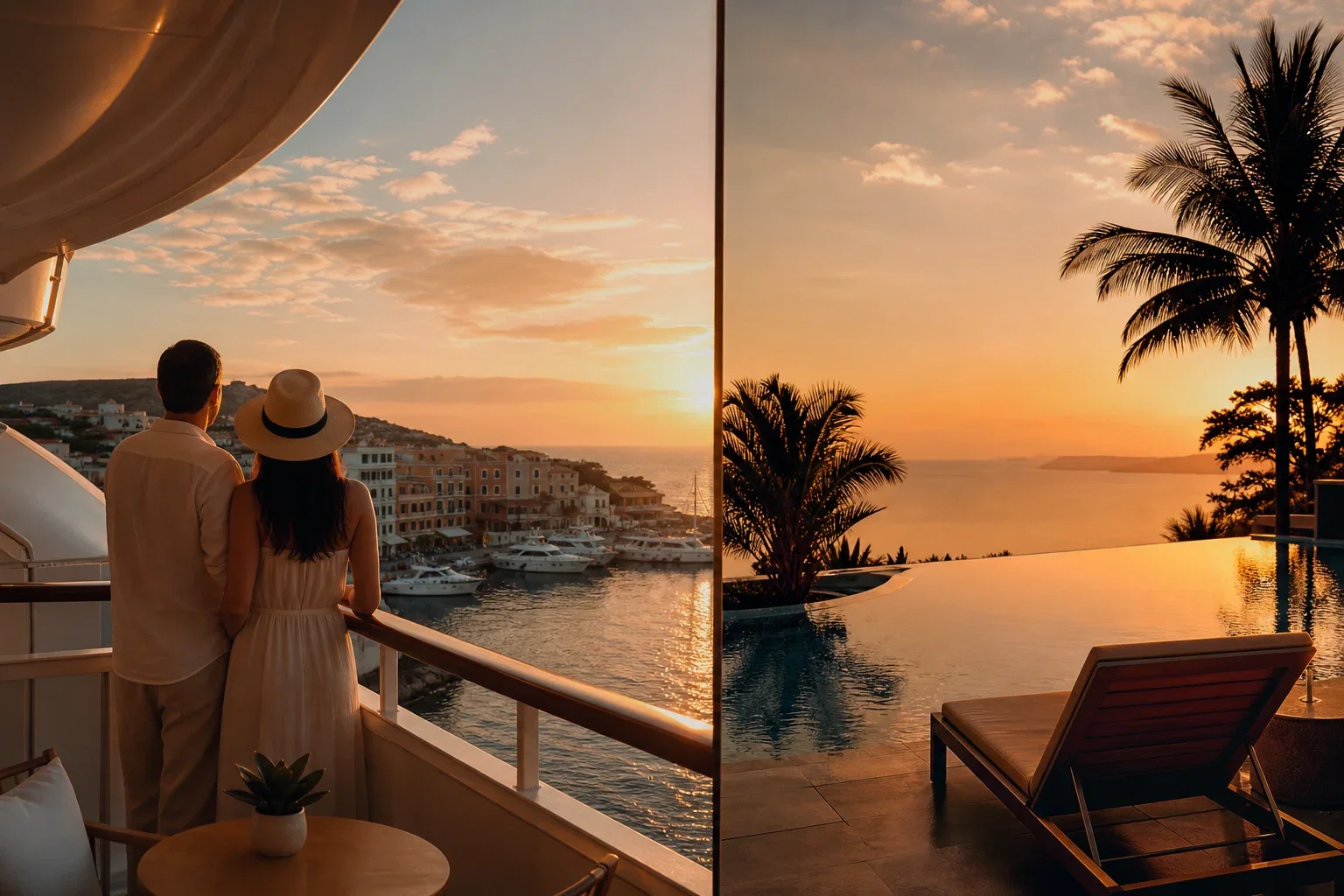
At an all-inclusive resort, you arrive, unpack, and stay put. The resort grounds become your world for the week. You might take a day trip to a nearby town or archaeological site, but the property itself is the primary destination. Your view from the balcony stays the same each morning, and that consistency is precisely what many travelers crave.
Neither approach is superior. Some people thrive on the energy of waking up somewhere new and squeezing every drop of exploration out of a trip. Others feel truly restored by settling into one place, reading a stack of books, and never setting an alarm. Before you compare prices or cabin sizes, it helps to ask yourself a simple question: when you picture a vacation that leaves you feeling refreshed, are you moving or are you still?
Accommodations: Space, Comfort, and Where You Sleep
Cruise Cabins: Compact but Efficient
Cruise cabins are designed to make smart use of limited square footage. Even a standard interior room will give you a comfortable bed, a small desk area, and a bathroom with a shower that works surprisingly well once you learn the geometry of it. Storage is tucked into every available corner: under the bed, behind mirrors, inside ottomans. You learn to live neatly, and most travelers find the space perfectly adequate because they simply are not in the room very much.
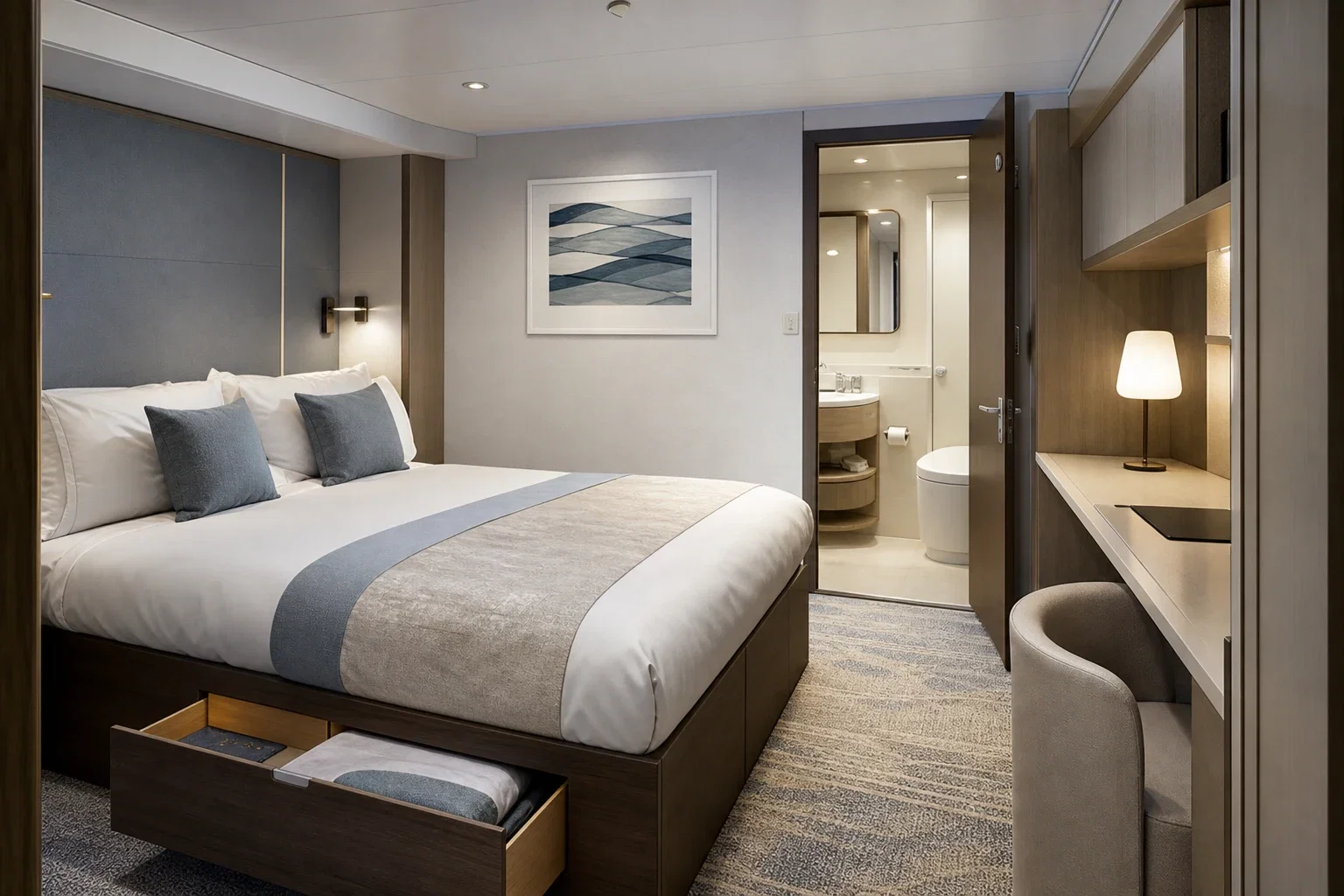
A balcony cabin changes the experience considerably. Having your own private outdoor space to watch a sunrise or listen to the water adds a layer of tranquility that makes the room feel larger than it is. Suites take things further with separate living areas, larger bathrooms with tubs, and sometimes access to exclusive lounges or dining rooms. Cabin location also matters: midship cabins feel less motion, higher decks offer better views, and rooms near elevators or nightlife venues can come with more hallway noise.
Resort Rooms: More Space, More Storage
Resort rooms are almost always larger than cruise cabins. A standard room at a mid-range all-inclusive will typically give you more square footage, a full bathroom with a tub or walk-in shower, generous closet space, and a separate sitting area. You have room to spread out, which matters more at a resort because you will likely spend more waking hours in your room.
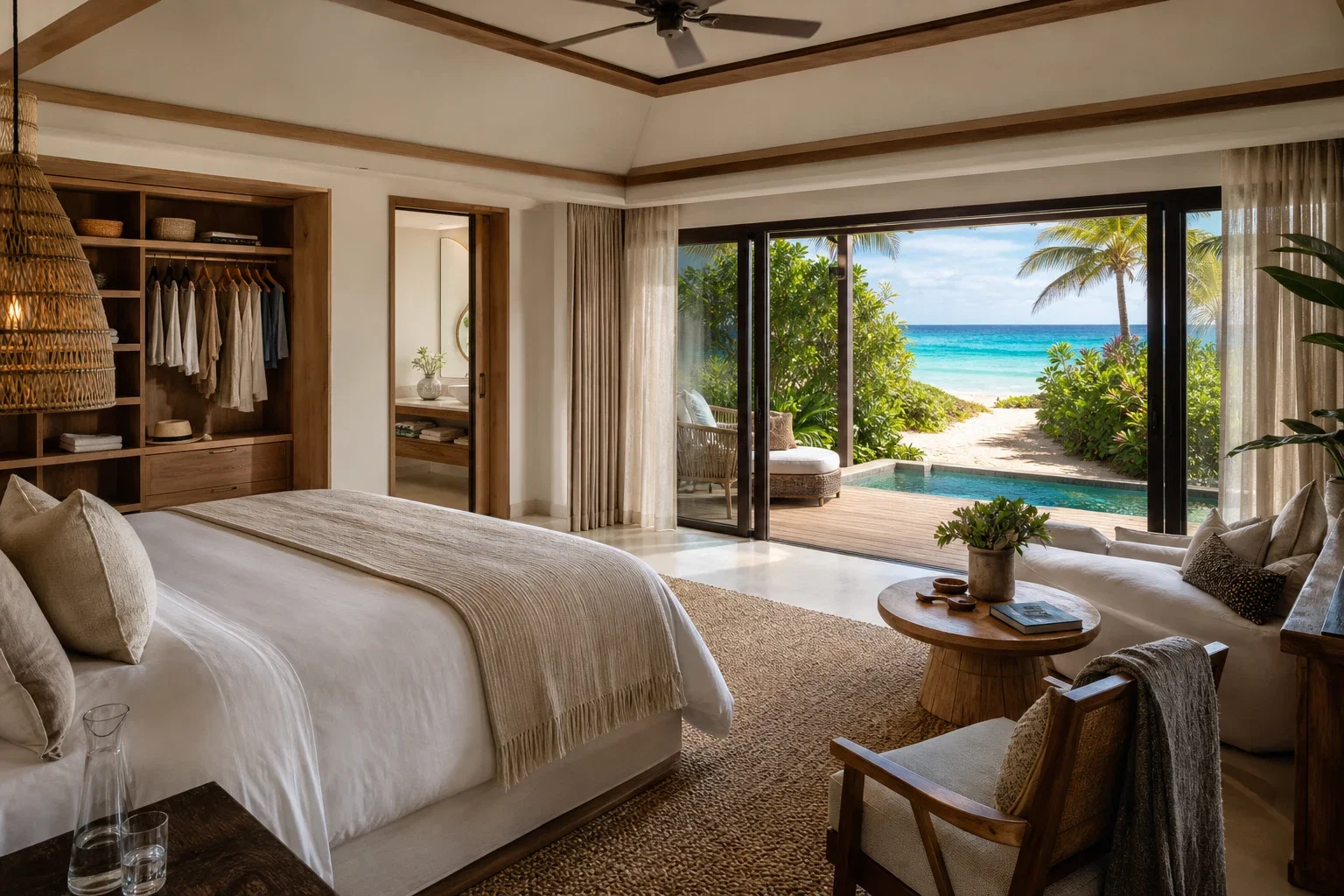
Suites and villas at higher-end properties can be genuinely impressive, with private plunge pools, outdoor showers, dedicated service staff, and direct beach or garden access. Ground-floor rooms with a terrace that opens onto the sand are a popular upgrade and can make the transition from room to ocean feel effortless. If having a spacious, comfortable room where you can linger over morning coffee or take an afternoon nap without feeling cramped is high on your priority list, a resort will generally win on accommodations.
One practical thing to consider: if you value lots of closet space or a tub for long soaks, check room dimensions and layouts before you book. Those details vary widely between ships and properties.
Dining: Variety vs. Consistency
Cruise Dining: Multiple Venues, Flexible Schedules
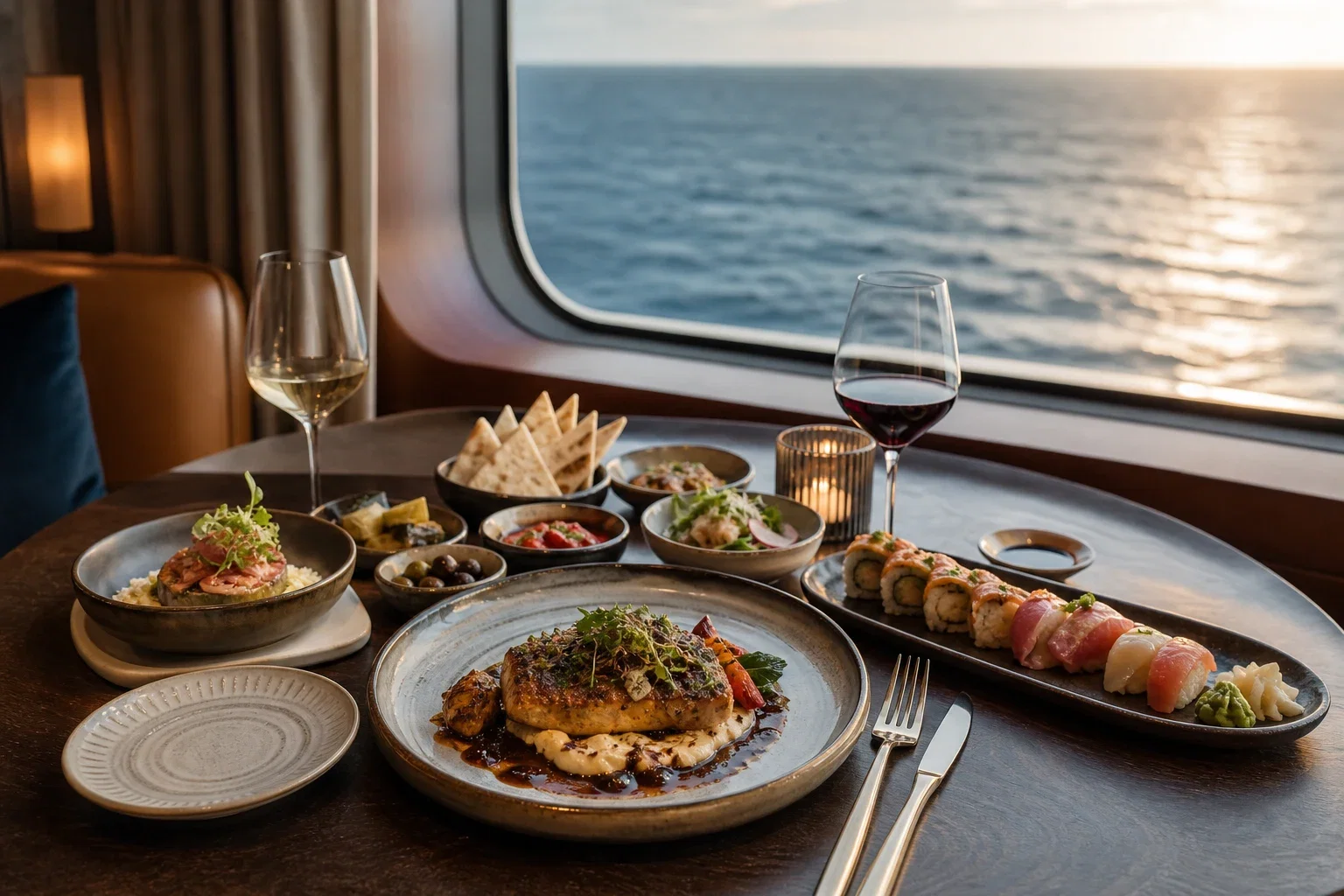
Dining on a cruise ship is an event in itself. Most ships offer a main dining room with multi-course dinners and rotating menus, a casual buffet for breakfast and lunch, and a handful of specialty restaurants that typically charge a supplemental fee. You might have Italian one night, a steakhouse the next, and sushi on a sea day afternoon. The variety is hard to match on land without leaving your hotel and hailing a taxi.
Cruise lines have moved toward flexible dining in recent years. You can choose a set seating time with the same table and waitstaff each evening, or you can opt for anytime dining and show up when you are ready. Room service is available on most ships, and dietary restrictions are generally handled well with advance notice; kitchen teams are accustomed to working around allergies and specific preferences.
Resort Dining: Fewer Choices, Predictable Quality
All-inclusive resorts typically include a buffet and a few à la carte restaurants in the base rate. The buffet is the workhorse of resort dining, serving breakfast, lunch, and dinner with varying degrees of quality depending on the property. The à la carte restaurants usually require reservations, and at popular resorts those can fill up quickly.
The range of cuisines is often narrower than what you would find on a cruise ship. You might have a regional restaurant, an Italian option, and a grill by the beach. At higher-end properties, dining can be exceptional, with menus created by noted chefs and ingredients sourced locally. At mid-range resorts, the food is frequently solid and reliable but not always memorable. If dining is a central part of how you experience a vacation, a cruise will likely offer more variety and more opportunities to try something different each evening.
Entertainment and Activities: What Is Included and What Costs Extra
Onboard Entertainment: Broadway to Comedy Clubs
Evening entertainment on a cruise ship is typically included in your fare and tends to be ambitious. Depending on the ship, you might find production shows, live bands, comedy acts, piano bars, and game shows that pull volunteers from the audience. There is almost always something happening after dinner, and you can be as social or as low-key as you like.
During the day, the options expand further. Enrichment programs may include cooking demonstrations, wine tastings, or talks from naturalists and historians. Active travelers can find rock climbing walls, surf simulators, pickleball courts, and jogging tracks. Kids and teens usually have age-specific clubs with supervised activities. Casinos, spas, and specialty fitness classes like yoga or spin typically carry additional charges.
Resort Entertainment: Poolside to Nightlife
Resort entertainment centers around the pool and beach during the day, with activities like water aerobics, volleyball, and trivia contests. The pace is generally slower and more self-directed—you can join in or simply relax with a book. Evening entertainment often includes live music, themed shows, karaoke, or DJ nights, though the production value is usually more modest than on a cruise ship.
Larger resorts may have water parks, lazy rivers, and swim-up bars that become social hubs in the afternoon. Kids' clubs vary widely in quality and hours; some properties offer extensive supervised programming, while others have limited options or charge extra for babysitting. Spa services, off-property excursions, and premium dining experiences are usually priced on top of the base rate, similar to how cruises treat certain amenities.
A planning tip: list the activities you expect to use and check whether they are included. That will help you estimate the real cost and decide which environment delivers a better fit for your interests.
Destinations and Exploration: One Place or Many?
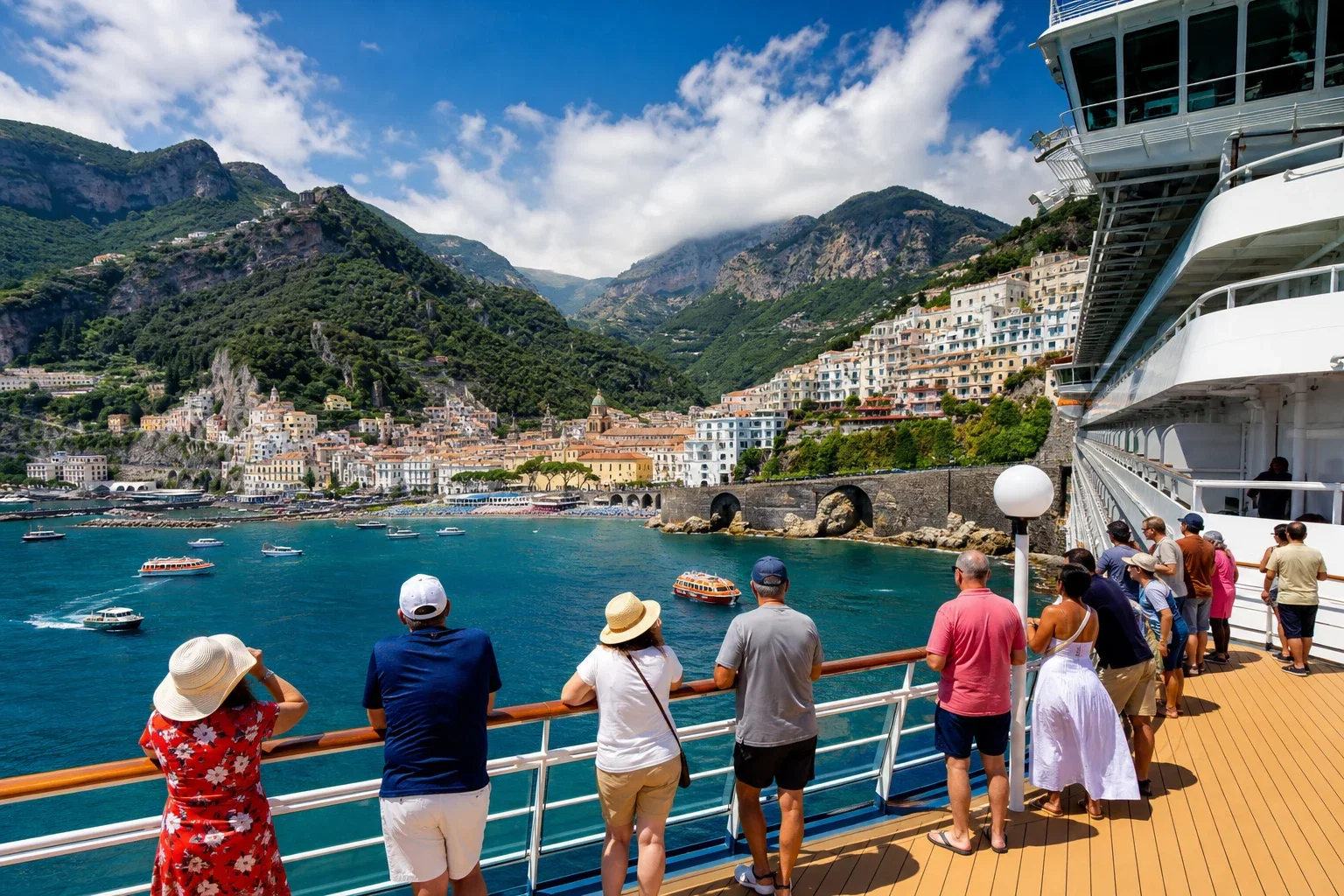
The Multi-Destination Advantage of Cruising
A cruise gives you a sampler platter of destinations. On a typical sailing, you might visit several ports, each with its own character, landscape, and culture. You unpack once and let the ship do the work of getting you from place to place. Shore excursions let you snorkel a reef, tour a historic fort, or hike to a waterfall, though these excursions are usually optional and priced separately.
Port days give you a taste of each destination rather than deep immersion. You typically have a block of hours ashore, which is enough to get a feel for a place and decide if you want to return for a longer stay someday. Sea days built into the itinerary provide a natural break between ports, giving you time to sleep in, enjoy the ship, and recharge before the next stop. Itineraries range widely—from short sailings to extended regional voyages—so the variety of destinations is extensive.
The Single-Destination Immersion of Resorts
At an all-inclusive resort, you stay in one place. That can be a strength or a limitation, depending on your travel style. If your goal is to truly unwind, the simplicity of a single location is a feature, not a bug. You learn the layout of the property, find your favorite spot by the pool, and settle into a rhythm that does not require any logistics.
Day trips to nearby attractions are possible but require planning and transportation. Many resort guests never leave the property at all, and that is perfectly valid. The resort experience is designed to be self-contained. For travelers who want to explore a region in depth, a resort can feel confining after a few days. For those who want to do absolutely nothing, it can feel like paradise.
Overall Value: What You Actually Pay vs. What You Get
The Base Fare: Overlapping Starting Points
Both cruises and all-inclusive resorts can have comparable starting fares for standard accommodations, though prices vary by season, destination, cabin or room category, and demand. Typical inclusions at the base level differ: a cruise fare usually includes the cabin, main dining and buffet meals, and a range of onboard entertainment, while a resort rate generally includes your room, meals, and many on-site activities and beverages. Airfare, transfers, spa services, premium excursions, and other extras commonly fall outside the base rate for both options.
The Add-Ons That Add Up
Where the comparison gets interesting is in the extras. Cruises often add automatic service charges and gratuities to onboard accounts, and beverages, specialty dining, shore excursions, Wi‑Fi, and spa treatments are frequently priced separately. Resorts tend to include more everyday drinks and on-site activities in the rate at many properties, but premium brands, off-property excursions, specialty services, and certain dining experiences are usually extra. Travel insurance is a smart investment for either type of trip.
The better question is which option includes more of what you will actually use. If you drink a lot of premium cocktails or plan many shore excursions, a resort or a cruise with an appropriate package might be more economical. If you prefer variety in dining and evening programming and consume little alcohol, a cruise could be a strong value. Estimate your typical daily habits and compare the total expected spend rather than focusing only on the headline price.
Which Vacation Fits Your Travel Style? A Practical Guide
A Cruise May Be Right for You If…
- You enjoy waking up in a new destination and exploring multiple places on a single trip.
- You like having a wide variety of dining options and evening entertainment.
- You are comfortable with a smaller cabin and do not need extensive closet or bathroom space.
- You appreciate structured activities and organized excursions.
- You are traveling with a group or family and want something for everyone without coordinating every meal and activity yourself.
An All-Inclusive Resort May Be Right for You If…
- Your ideal vacation involves lounging by the pool or beach without moving locations.
- You value a larger room with more storage and a full bathroom.
- You prefer many beverages included in your rate without managing packages or receipts.
- You want a slower pace with the freedom to do as much or as little as you choose.
- You are celebrating a honeymoon, anniversary, or milestone and want a romantic, private setting focused on time together.
The Middle Ground: When Both Could Work
Many travelers enjoy both styles and alternate depending on the trip. A cruise might be perfect for a family reunion where multiple generations want different things, while a resort suits a quiet couples' getaway. River cruises offer a hybrid experience with smaller ships, included excursions, and more intimate dining that appeals to travelers who want destination immersion without sacrificing comfort. Expedition cruises combine the convenience of a ship with deep exploration of a single region. There is no rule that says you have to pick one style forever.
Making Your Decision: Questions to Ask Yourself Before Booking
Before you commit to either option, take a few minutes to think through what you really want from this trip. How important is unpacking once versus seeing multiple destinations? Do you prefer a structured schedule or complete freedom each day? How much do you value spacious accommodations versus onboard variety? Are drinks and specialty dining central to your vacation experience, or are you happy with what is included? Who are you traveling with, and what does each person want from the trip? What is your realistic budget including all extras, not just the base fare? Your answers will point you toward the right choice more reliably than any list of pros and cons.
One planning suggestion I often share: make a short “must-have” list (three things) and a “nice-to-have” list (three things). Compare each option against those lists and you’ll usually see a clear winner.
How a Travel Advisor Can Help You Compare and Choose
Comparing cruises and resorts on your own can quickly become overwhelming. There are dozens of cruise lines, hundreds of ships, and thousands of resort properties, each with its own personality, inclusions, and quirks. A travel advisor can help you cut through the noise and focus on options that genuinely match your travel style and budget.
What a good advisor brings to the table is personalized research, experience with supplier information and guest feedback, and assistance assembling a realistic, all-in costs estimate for the trip you want. Advisors may have professional relationships with cruise lines and resorts that can make it easier to request room locations, arrange special occasions, or inquire about promotions—but such perks are never guaranteed and vary by supplier, season, and availability.
It’s also important to clarify how an advisor is compensated and what that means for you. Some advisors are paid by suppliers, some charge fees, and others use a combination of methods. Pricing, promotional offers, and booking terms can differ between suppliers and booking channels, so ask your advisor to explain how they compare options, what they can secure on your behalf, and how they handle changes or issues before and during travel.
One question to ask when you contact an advisor: how do you verify current details about a specific ship, itinerary, or resort? Their response will tell you how they stay up to date and how they’ll help you make an informed choice.
Conclusion
Neither a cruise nor an all-inclusive resort is the universally better choice. The right vacation is the one that aligns with how you like to travel, who you are traveling with, and what you want your days to feel like. Both options can deliver a wonderful, memorable trip when they are matched to the right traveler.
Think about what matters most to you. Is it waking up to a new view each morning, or settling into a comfortable room and never moving your suitcase? Is it having a dozen dining venues to explore, or knowing your favorite spot by the pool will be waiting for you every afternoon? There is no wrong answer—only the answer that fits you.
If you would like help comparing specific cruises and resorts, I’m happy to walk you through the options and estimate the all-in costs based on how you like to spend your days. Visit Traveltodayinstyle.com when you are ready to start planning, and we can figure out the right fit together.


 Featured Travel